Mission EVOLUTION

"If we worked on the assumption that what is accepted as true really is true, then there would be little hope for advance."

- Orville Wright -


The longest zero-emissions flying trip yet.

As the demand for air travel continues to rise, so does the need to address its environmental impact, and General Aviation is not excluded. For this reason, it is time to challenge the boundaries of our reality by launching the project -Mission EVOLUTION.

A project aimed to demonstrate that we have the technology and infrastructure available to fly private and still have the same flying experience, but this time, having an alternative to fossil fuels using hydrogen and making General Aviation a contributor to cleaning our air.

This project aims to unveil the possibilities of hydrogen as an alternative energy source for aviation and shatter the preconceived limits of what can be achieved in General Aviation. We are embarking on a journey of epic proportions, setting out to complete the longest flight yet with multiple stops like many General Aviation trips, thereby demonstrating the feasibility of zero-emissions aviation. However, this is not just about the airplane; it is a comprehensive showcase of the infrastructure required to support such a revolutionary shift. 

1000+
miles 

150
knots

1000 lbs
payload

4
seats

trip


The public´s acceptance of the next step in the evolution of a technology happens by demonstrating that the new one is as practical and safe as the well-established one. In essence, the practicality and safety of new technology are the cornerstones upon which successful adoption and integration into society are built.

General Aviation pilots plan long-trip missions with passengers, cargo, and fuel stops every day; the only way to show zero-emissions flights is a real alternative. We need to demonstrate that we can mimic the same type of mission if we want one-day zero-emissions flying to be accepted.

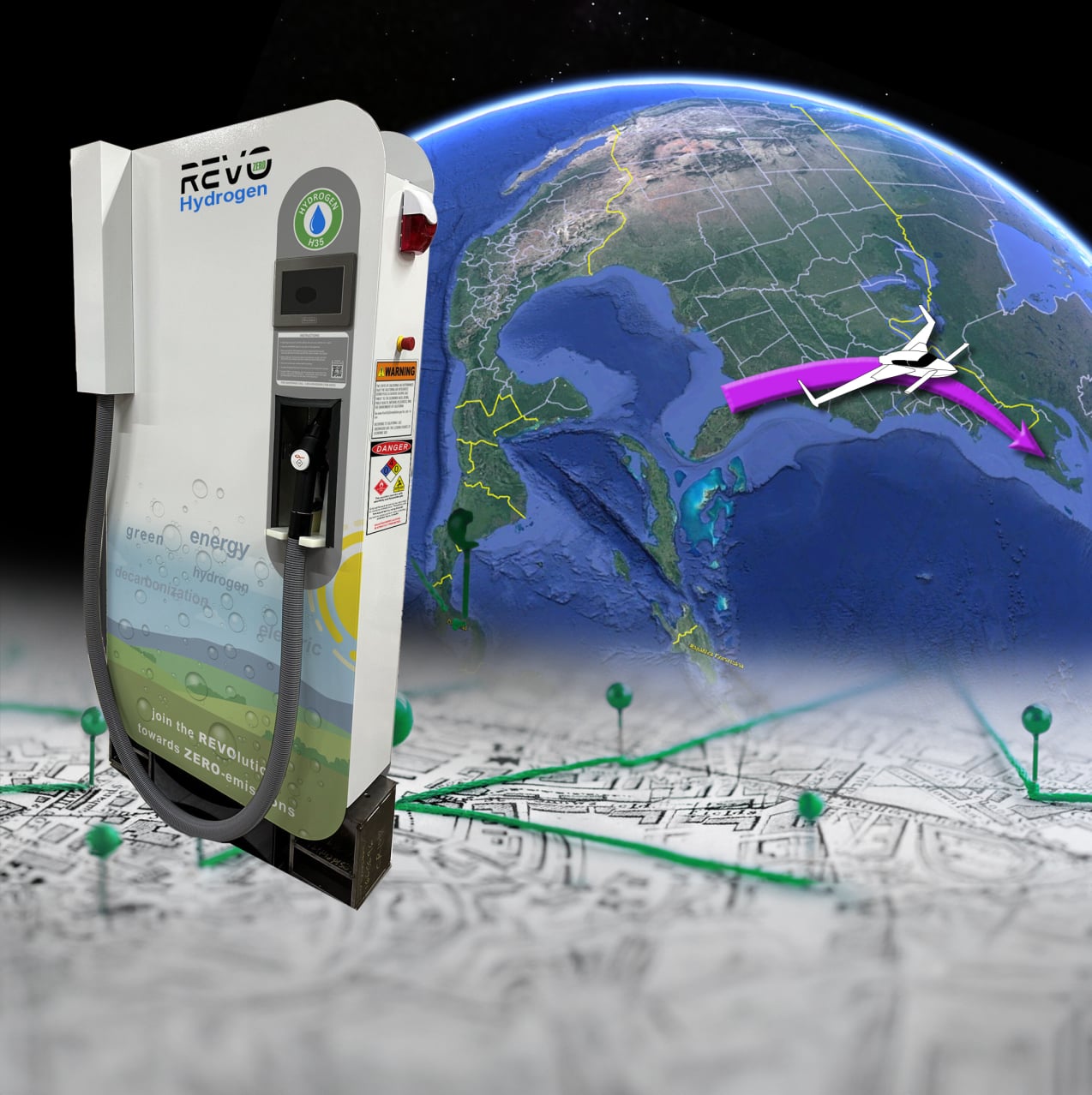
Like the Wright brothers, we chose the United States East Coast for our project. The first longest zero-emissions flying trip, but this time, we will travel from the South to the North. The primary objective of this historic flying trip is to showcase the practicality of the long-range trip capabilities of hydrogen-powered aircraft. However, the success of a long-distance hydrogen-powered flight requires a robust hydrogen infrastructure, and that is as critical as the airplane itself.

Hydrogen infrastructure is being deployed across airports in the United States. That infrastructure is the foundation for the future of hydrogen zero-emissions and is key to the success of our mission.

A journey of this magnitude captures the imagination and interest of the public. It provides a platform to educate and engage with communities and showcase the potential benefits of hydrogen as a clean energy source for aviation. By fostering awareness and garnering public support, this endeavor contributes to the wider adoption of hydrogen-powered flight and promotes a collective commitment to clean our environment.

thrust

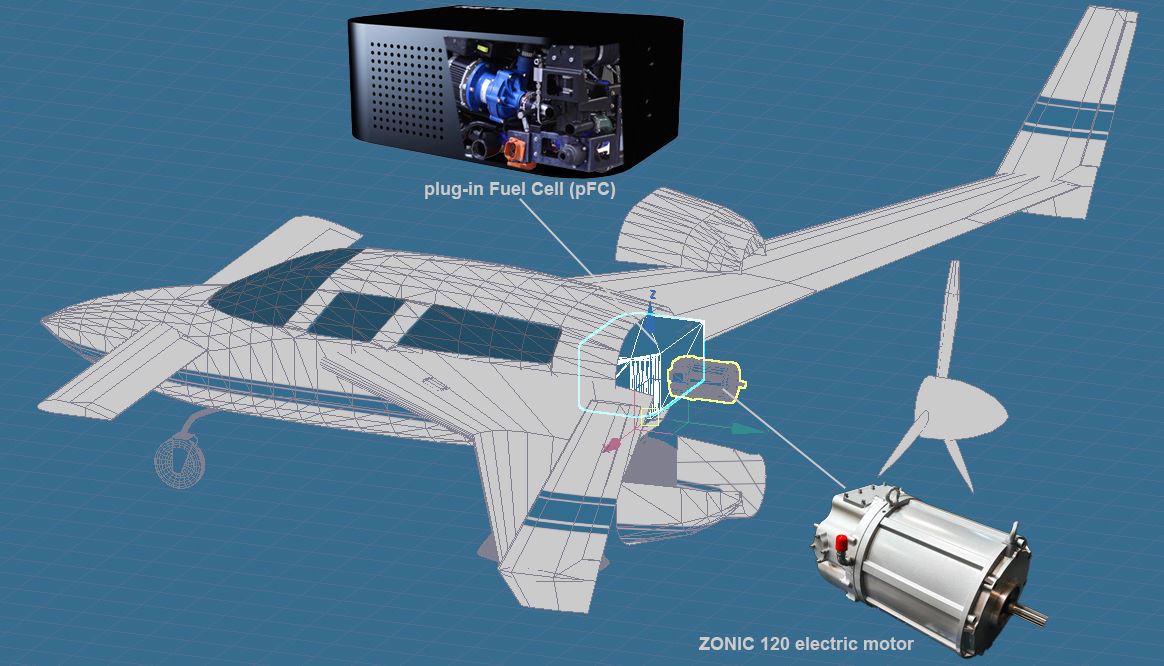
Hydrogen is a container of electricity a fuel cell harnesses to drive an electric motor that propels the aircraft. A fuel cell combines hydrogen and oxygen; the result is electricity with the only byproduct of pure, clean water.

As the electric motor turns the propeller, it creates a forward thrust force, allowing the airplane to move through the air. The amount of thrust can be controlled by varying the power supplied to the electric motor, enabling the pilot to adjust speed and altitude.

The significant advantage of a hydrogen-powered aircraft is that the only byproduct of the chemical reaction in the fuel cell is water vapor, making it a zero-emission technology. 


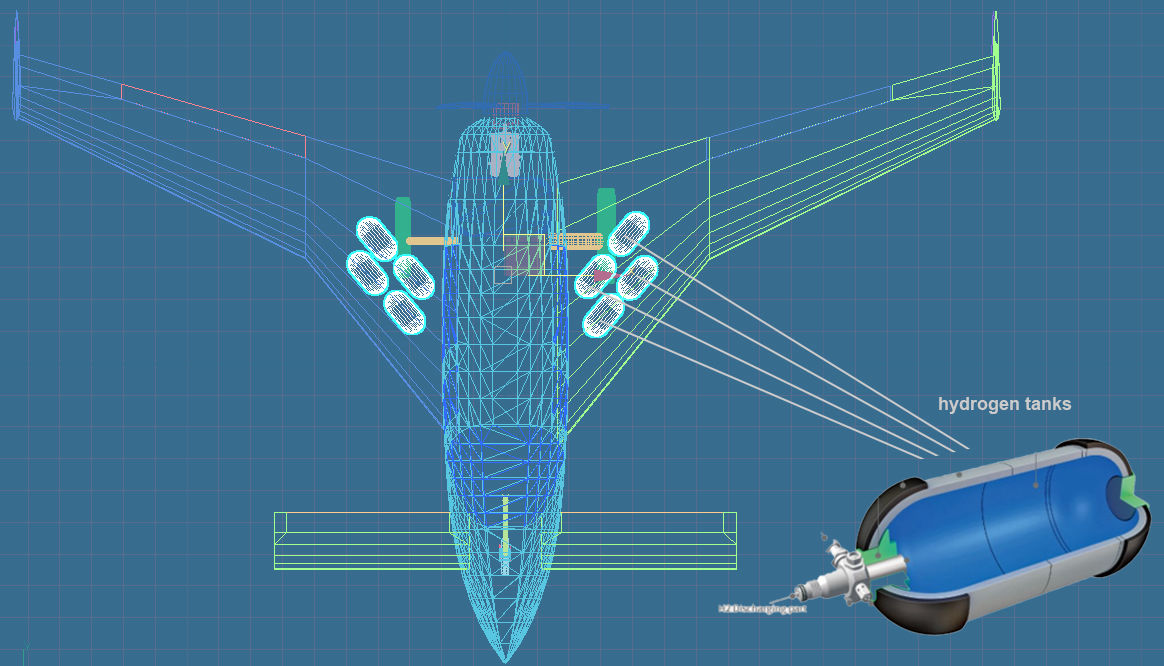
One of the key engineering challenges in hydrogen-powered aircraft design is the safe and efficient storage of hydrogen. In the same way as what happens with conventional fuels, hydrogen tanks are stored within an airplane's wings as conventional fuels. This innovative approach maximizes space utilization and enhances the aircraft's balance and performance.

This efficient use of existing space minimizes the need for significant alterations to the aircraft's overall design, making it still a practical and usable General Aviation airplane. An aircraft's weight distribution is critical to its stability and flight performance. By integrating hydrogen tanks into the wings, aircraft can have a more balanced weight distribution, maintaining the aircraft's center of gravity within optimal limits ensuring safe and controlled flight. Also, the increased energy density of hydrogen and its efficient storage in tanks in the wings allow for extended flight durations without compromising performance.

why

Some might argue that the efforts of zero-emissions aviation have to focus only on commercial flights, but the same could be said about electric trucks. However, electric cars came first, made zero-emissions technology widely accepted, and created that foundation to tackle large transportation. The fact is that all revolutions start with the people first. Cleaning our environment is something many of us want to contribute in any way we can, and our project, Mission EVOLUTION, is designed to allow General Aviation pilots to jump into the wagon, too.

This revolution can pioneer innovation, refine hydrogen propulsion systems, and expand infrastructure before scaling up to larger. Transitioning to hydrogen power in aviation requires the development of a comprehensive infrastructure, including hydrogen production, storage, and refueling facilities. Starting with General Aviation allows for a gradual build-up of this infrastructure, making it more feasible and cost-effective. Once established, this infrastructure can then support larger-scale commercial aviation.

While transitioning to zero-emissions aviation is a worthy long-term goal, starting with General Aviation is a strategic step. It allows the industry to innovate, develop infrastructure, test regulatory frameworks, build public trust, and diversify use cases. General Aviation is the foundation upon which the aviation revolution can be constructed, enabling the aviation industry to progressively embrace hydrogen power and usher in a more sustainable and environmentally friendly era of flight.

technological consortium


become an sponsor

The successful realization of the Mission EVOLUTION project hinges significantly on the support and sponsorship from both the public and organizations.

It is fact that zero-emissions aviation is a critical step toward mitigating the environmental impact of traveling. Sponsors play a pivotal role in accelerating this progress, demonstrating a commitment to a sustainable future and helping to reduce the aviation industry's environmental impact.

The public and organizational sponsorship may fuel innovation by financially supporting our project by directly contributing to advancements in zero-emissions hydrogen technology, energy efficiency, and aviation. The success of our project will serve as a catalyst for the wider adoption of hydrogen-powered aviation. Sponsors create a paradigm shift in the industry, promote cleaner and more sustainable aviation practices, and encourage other stakeholders to follow suit.

You can support the Mission EVOLUTION program by becoming a Corporate Sponsor and enjoy the following benefits:

CORPORATE SPONSORSHIP

• Logo prominently displayed on the aircraft and official merchandise
• Co-branded promotional merchandise for sponsor distribution
• Featured logo and link on the official event website homepage
• Organization name mentioned in all press releases
• Right to issue public announcements about the sponsorship
• On-stage representation at all public panels and town halls
• VIP access to take-off and landing media events
• Complimentary public event tickets for take-off and landing celebrations
• Professional photos with the aircraft, pilot, and leadership team
• Brand exposure across global aviation and sustainability media channels
• Invitation to exclusive sponsor-only networking events
• Inclusion in behind-the-scenes documentary or event video reel
• Custom interview feature with sponsor executive in event media kit
• Logo featured on banners, signage, and digital displays at all venues
• Recognition in thank-you speech at milestone events
• Priority access to future innovation initiatives and demonstration flights
• Certificate of participation and historical recognition as inaugural sponsor
• Use of “Official Sponsor” badge across sponsor’s marketing platforms
• Opportunity to co-host educational outreach and STEM partnerships

Being a Mission EVOLUTION Corporate Sponsor more than a sponsorship. It’s a once-in-a-generation platform to be part of aviation history, showcase sustainability leadership, and capture global media attention. 


© Copyright 2023 REVOZERO - All Rights Reserved